
A cancer vaccine tailored to an individual patient’s tumor is showing promise in melanoma. New Phase 3 findings also highlight the importance of understanding how tumors interact with the immune system—a research area supported by Sino Biological’s cancer immunology antibodies and recombinant protein services.
According to Nature, the investigational mRNA vaccine intismeran autogene, developed by Moderna and Merck, reduced the risk of melanoma recurrence or death by 42% when combined with pembrolizumab (Keytruda), compared with pembrolizumab plus placebo. A Personalized Approach to Immune Recognition
Intismeran is designed around mutations in each patient’s tumor. Its mRNA encodes specific tumor-specific markers, called neoantigens, to help the immune system recognize and attack them.
Pembrolizumab complements that approach by blocking PD-1, an immune checkpoint that can restrain T-cell activity. The combination pairs personalized immune targeting with checkpoint inhibition. In the Phase 3 INTerpath-001 trial, it improved recurrence-free and distant metastasis-free survival; follow-up continues to assess overall survival.
Studying the Biology Behind the Response
For researchers, these findings raise important questions: Which tumors respond? How do immune checkpoints influence that response? And which markers can help characterize the tumor’s immune environment?
Sino Biological’s Cancer Immunology Antibody portfolio includes reagents for investigating immune checkpoints, immune-cell markers, and cancer-associated signaling. Relevant examples include:
| Research focus | Sino Biological product | Validated application |
| Detecting PD-1 in tissue | PD-1 Antibody, 10377-MM23 | Immunohistochemistry in paraffin-embedded human tissue |
| Measuring cell-surface PD-L1 | PD-L1 Antibody, 10084-R312 | Flow cytometry, human |
| Investigating additional immune checkpoints | LAG-3 Antibody, 16498-T20 | ELISA and immunoprecipitation, human |
Understanding these checkpoints helps explain why recognizing a tumor may not be enough to generate an effective immune response. When PD-L1 binds to PD-1, it can dampen T-cell activity, while LAG-3 provides another route for immune regulation. Studying these targets can help researchers investigate how tumors suppress immune responses and explore the rationale for combining cancer vaccines with checkpoint inhibitors.
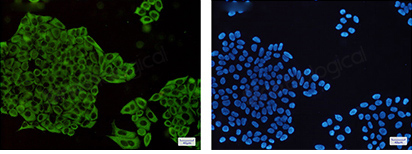
These reagents offer practical tools for studying checkpoint expression and tumor–immune interactions. Sino Biological’s Featured antibody validations
Supporting the Next Stage of Research
Alongside catalog antibodies, Sino Biological offers custom recombinant protein and antibody production through its Houston Center for Bioprocessing, including protein characterization and binding-analysis services. These capabilities can support laboratory studies of targets, antibodies, and molecular interactions relevant to immunotherapy research.
Personalized cancer vaccines still face questions around manufacturing, access, and long-term benefit. While Intismeran is still in clinical trials , the recent findings mark progress toward treatments guided by the biology of each patient’s tumor.
Explore Sino Biological’s cancer immunology research tools.
Sources
Nature: Moderna mRNA vaccine almost halves the risk of skin cancer returning.
Merck and Moderna: Phase 3 INTerpath-001 topline announcement (August 19, 2026).
Sino Biological: Cancer Immunology Antibodies; PD-1 antibody validation; Center for Bioprocessing.