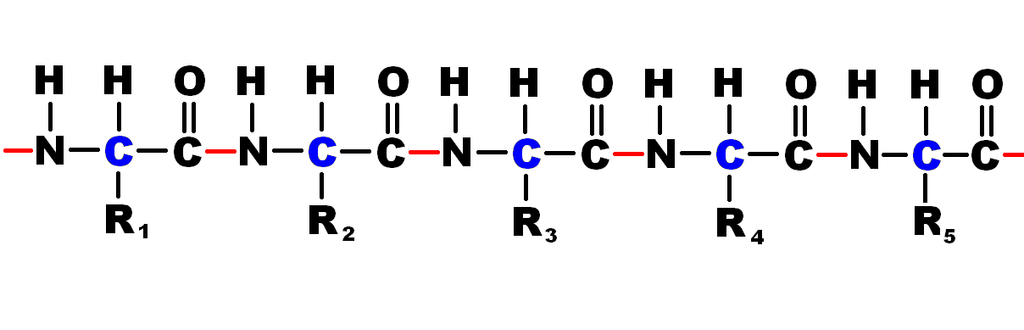
Simplified peptide chain; not the structure of icotrokinra. Credit: شہاب/Wikimedia Commons, CC BY-SA 4.0. Unmodified.
Peptide medicines are expanding the possibilities for targeted inflammation research. Icotrokinra is an oral peptide that selectively blocks the IL-23 receptor. Recently approved in the United States for eligible patients with moderate-to-severe plaque psoriasis and is being investigated in other inflammatory diseases. [1]
What the latest studies show
An October 2026 phase 2b ulcerative colitis trial enrolled 252 adults. At week 12, clinical responses occurred in 63% of participants receiving the highest tested dose, versus 27% receiving placebo. Clinical remission—a more stringent primary outcome—was 30% in the treatment group versus 11% in the placebo group. While these findings support further clinical evaluation; this indicationremains investigational. [2]
On November 7, Johnson & Johnson announced phase 3 psoriatic arthritis results: 58% receiving icotrokinra achieved an ACR20 response at week 16, versus 41% receiving placebo. ACR20 measures improvement, not remission. These were sponsor-reported conference findings, and this indication remained unapproved. [3]
Tools for investigating the pathway
Studying targeted therapies starts with understanding molecular interactions. Sino Biological’s human IL-23 receptor protein and human IL-23 protein provide research materials for investigating this signaling pathway. Product specifications help researchers select a suitable format. [4, 5]
Peptides also serve as antigens for antibody development. Sino Biological’s peptide antigen services include design, synthesis, and conjugation, with modifications such as phosphorylation and biotinylation. [6]
Contextualizing Clinical Endpoints
The percentages describe different outcomes in different studies. Clinical response in ulcerative colitis indicates improvement according to the study’s criteria; remission is a separate endpoint. ACR20 in psoriatic arthritis combines changes in joint counts and other measures of disease activity. Comparing these percentages across diseases would therefore be misleading. [2, 3]
These results also do not establish that an oral peptide is superior to an injectable biologic. The comparisons shown here are against placebo, and longer-term evidence remains important. The oral format is an interesting delivery option, but each indication needs its own assessment of benefit and safety. [2, 3]
The same precision matters in research. A therapeutic peptide is developed to influence a biological process, while a peptide antigen is used to help generate antibodies against a particular epitope. Sino Biological’s antigen service supports the latter within custom antibody-development projects. [6]
Summary of Selected Icotrokinra Data
| Study and endpoint | Icotrokinra | Placebo |
| Phase 2b UC: clinical response, week 12 | 63% (400-mg group) | 27% |
| Phase 2b UC: clinical remission, week 12 | 30% (400-mg group) | 11% |
| Phase 3 PsA: ACR20, week 16 | 58% | 41% |
Separate studies and endpoints; not a head-to-head comparison. UC = ulcerative colitis. PsA = psoriatic arthritis. [2, 3]
As the field advances, each disease still needs its own evidence. Explore Sino Biological’s IL-23 reagents and custom antibody services to support your research.
References
[1] DailyMed: ICOTYDE U.S. prescribing information. Initial U.S. approval: 2026.
[2] Phase 2 Trial of Icotrokinra for Patients with Ulcerative Colitis. N Engl J Med. 2026;395:1495–1504. October 14, 2026. DOI: 10.1056/NEJMoa2604435. Trial summary based on the indexed abstract.
[3] Johnson & Johnson: Phase 3 psoriatic arthritis results. November 7, 2026. Sponsor-reported conference findings.
[4] Sino Biological: Human IL-23 receptor protein, 13840-H41H-B.
[5] Sino Biological: Human IL-23 protein, CT048-H08H-UE.
[6] Sino Biological: Protein and peptide antigen production services.