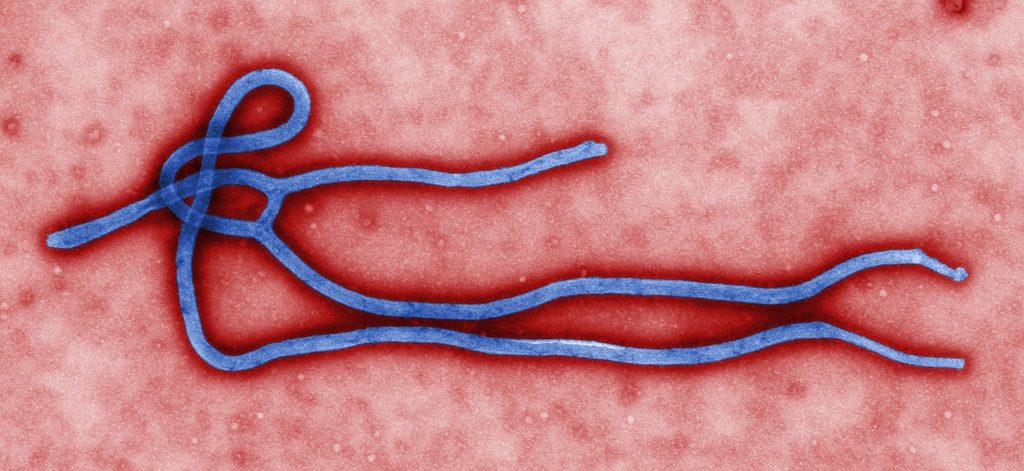
Colorized Ebola virus micrograph; not an image of the current Bundibugyo outbreak. Credit: CDC/Cynthia Goldsmith, PHIL 10816, public domain.
The Bundibugyo outbreak highlights a challenge in Ebola preparedness: tools developed for one virus cannot automatically be assumed to work against another. WHO’s November 6, 2026 update reported continued transmission in the Democratic Republic of the Congo, underscoring the need for timely care, detection, and research. [1]
A gap in protection
Ebola disease can be caused by related but distinct viruses, including Ebola virus, Sudan virus, and Bundibugyo virus. These differences matter when assessing vaccines and treatments. [2]
WHO’s September 2026 guidance states that there is no licensed Bundibugyo vaccine. Ervebo is licensed against Ebola virus disease, but protection against Bundibugyo in humans remains unestablished. WHO recommends its use in this outbreak only within a research protocol while evidence is generated. [2]
Research needs relevant targets
WHO has called for evaluation of diagnostic platforms and clinical trials of candidate countermeasures. Laboratory research supports these efforts by studying viral targets and how they are recognized. [3]
Sino Biological’s Ebola antigen and antibody catalog covers Bundibugyo, Sudan, and Zaire, with targets including glycoprotein and nucleoprotein. Glycoprotein reagents support immune-recognition and antibody-screening research, while nucleoprotein reagents can support detection-related studies. [4]
Catalog entries identify the strain, expression host, and protein format, helping researchers select materials suited to their questions. These research reagents support development and evaluation; they are not themselves evidence of clinical protection or diagnostic accuracy.
Turning research materials into useful evidence
The distinction between a research reagent and a validated countermeasure is important. An antibody may recognize a viral protein in a laboratory assay without proving that it protects people from disease. Likewise, detecting a target under experimental conditions is only one step toward establishing how a diagnostic performs in practice.
For research teams, the starting point is a clear question: which viral component needs to be measured, and which materials are relevant to that question? Sino Biological’s catalog provides target and strain information that can guide this selection. Reviewing those details helps connect a study’s objective with the appropriate antigen or detection antibody. [4]
WHO’s recommendations place this laboratory work within a broader response that includes clinical evaluation, surveillance, and community engagement. Better tools are valuable when the evidence supporting them is clear and their use fits the needs of the response. [3]
Connecting research goals with relevant tools
| Research goal | Relevant resource | Key distinction |
| Studying immune recognition | Glycoprotein antigens | Recognition alone does not establish protection |
| Developing detection approaches | Nucleoprotein and detection antibodies | Assay performance requires validation |
| Selecting relevant materials | Virus and strain specifications | Match the material to the study question |
Examples of research applications; these are not clinical performance claims. Sources: WHO and Sino Biological. [3, 4]
Preparedness requires sustained research alongside surveillance and care. Explore Sino Biological’s Ebola research resources and glycoprotein catalog to review available proteins, antibodies, and genes for your next project.
References
[1] WHO: Bundibugyo virus disease outbreak update. November 6, 2026; case figures through November 3.
[2] WHO: Ebola vaccines—questions and answers. September 9, 2026.
[3] WHO: Emergency Committee temporary recommendations. August 24, 2026.