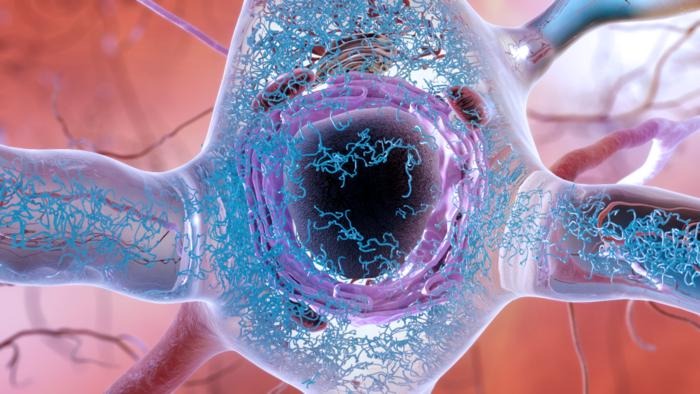
Blood-based tests are changing how Alzheimer’s-related biology is assessed. In August 2026, the FDA cleared Roche’s Elecsys pTau217 plasma test to help evaluate amyloid pathology in people aged 55 and older with signs, symptoms, or complaints of cognitive decline. Results must be interpreted alongside clinical findings. [1, 2]
Why p-tau217 matters
Tau helps support structures inside neurons. A modified form, p-tau217, carries a phosphate group at a specific position and is associated with Alzheimer’s-related amyloid pathology. Measuring it offers a focused way to investigate disease-associated changes. [4, 5]
Blood testing can make evaluation less invasive, but it does not explain every cause of memory loss. The FDA’s first cleared Alzheimer’s blood test, introduced in 2025, was explicitly not intended as a stand-alone diagnostic or screening test. [3]
Tools behind more precise measurement
Developing these assays requires antibodies that recognize the intended target and well-characterized materials for evaluating their specificity.
Sino Biological’s full-length p-Tau217 protein, catalog T08-50SN, supports antibody evaluation and biomarker assay development. According to the company, this tag-free reagent has greater than 75% phosphorylation at Thr217, with no detectable phosphorylation at Thr181 or Thr231 by mass spectrometry. [5]
Its broader tau protein portfolio includes multiple isoforms, phosphorylated proteins, mutants, and biotinylated formats for studying tau biology and developing research assays. The appropriate format depends on the question being investigated. [4]
From a promising marker to a dependable assay
An assay must distinguish the molecular feature it is designed to detect from related forms of the same protein. For p-tau217 research, that means evaluating whether an antibody recognizes phosphorylation at the intended site and how it responds to other tau materials. Well-characterized reagents help researchers investigate those questions before moving to clinical validation. [5]
Different testing approaches also answer different practical questions. Blood sampling offers a less invasive route than collecting cerebrospinal fluid, while PET imaging provides a way to visualize amyloid deposits. A blood biomarker does not directly reproduce a brain image, and a result should be interpreted within the specific test’s intended use. This is why access to testing and confidence in interpretation need to advance together. [2, 3]
How Alzheimer’s testing approaches differ
| Approach | What it assesses | Practical distinction |
| Blood biomarkers | Disease-associated proteins or ratios | Blood draw; interpretation depends on the assay |
| Amyloid PET | Amyloid deposits in the brain | Imaging-based assessment |
| Cerebrospinal fluid testing | Biomarkers in spinal fluid | Requires a lumbar puncture |
Comparison of approaches, not a ranking of diagnostic performance. Sources: FDA and Roche. [2, 3]
As Alzheimer’s testing advances, reliable measurement remains essential. Explore Sino Biological’s tau catalog and neurodegenerative disease resources to find tools for your next study.
References
[1] FDA clearance record: Elecsys Phospho-Tau (217P) Plasma, K261686. Decision: August 19, 2026.
[2] Roche: FDA clearance announcement. August 24, 2026.
[3] FDA: First blood test used in diagnosing Alzheimer’s disease. May 16, 2025.
[4] Sino Biological: Tau proteins and research applications.
[5] Sino Biological: Full-length p-Tau217 protein announcement. July 29, 2026.